

A slow kitchen sink can become a sewage backup faster than most property owners expect. When comparing drain snaking versus hydro jetting, the right answer depends on what is blocking the pipe, where the blockage sits, and whether the line is strong enough for more intensive cleaning. One method may restore flow quickly. The other may remove the buildup that keeps bringing the same problem back.
For homes, rental properties, restaurants, and commercial spaces across the Greater Toronto Area, guessing is expensive. A licensed drain professional should diagnose the line first, often with a camera inspection, then recommend the cleaning method that solves the actual problem with no surprises.
Drain Snaking Versus Hydro Jetting: The Key Difference
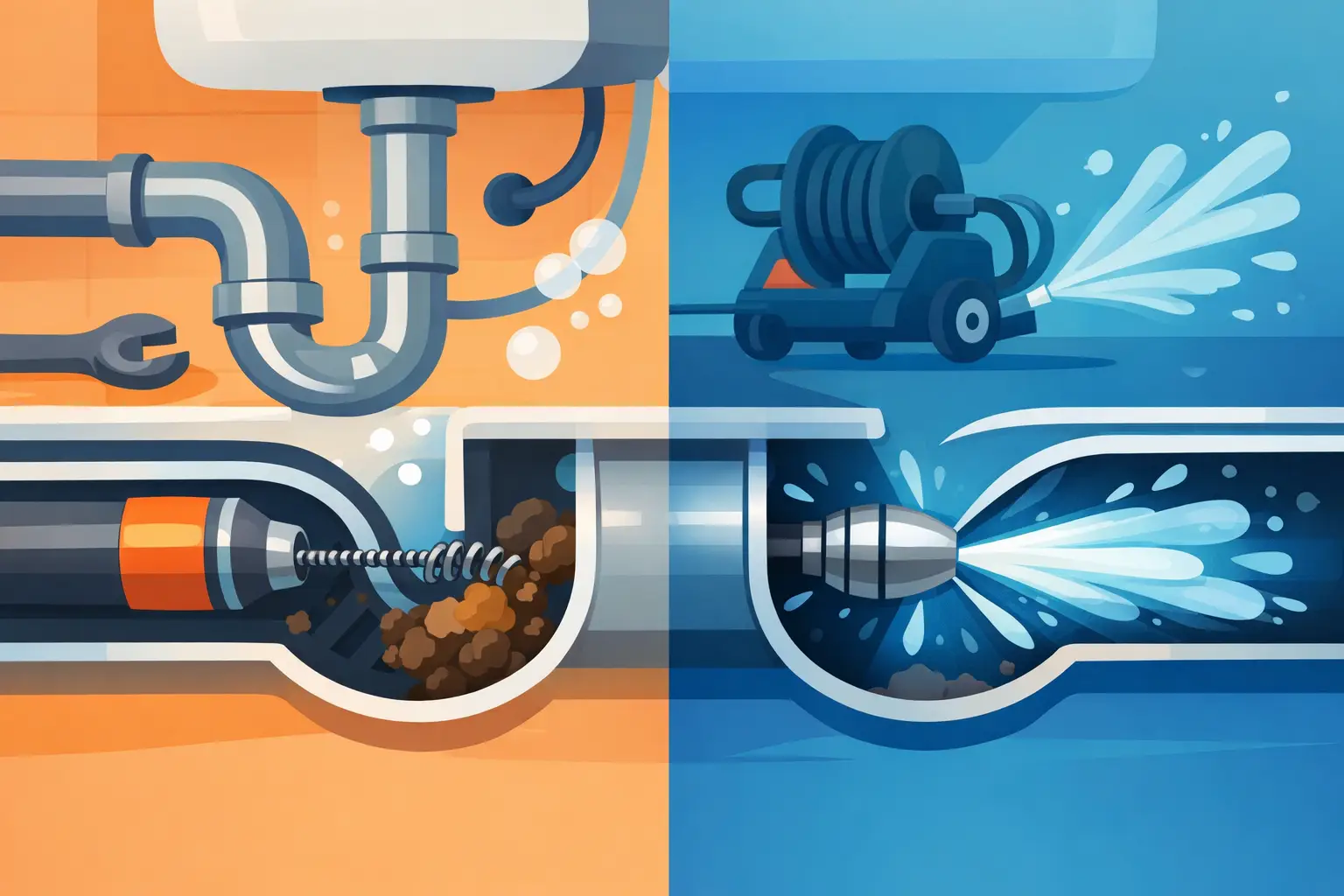
Drain snaking uses a flexible steel cable with a cutting head or retrieval tool on the end. The technician feeds the cable through the drain until it reaches the blockage, then rotates it to break apart, cut through, or pull back the obstruction. It is a targeted mechanical method that has been used for decades.
Hydro jetting uses a specialized hose and high-pressure water nozzle. The nozzle moves through the pipe while sending water forward to break up the blockage and backward to scour the pipe walls. Rather than simply opening a hole through a clog, hydro jetting can flush out grease, scale, sludge, loose debris, and root fragments along a longer section of the line.
Both services can be effective. The difference is scope. Snaking is often best for a localized obstruction. Hydro jetting is designed for deeper cleaning when buildup coats the pipe or repeat clogs point to a larger drain-line issue.
When Drain Snaking Is the Better Choice
A drain snake is often the fast, practical answer when one fixture is clogged and the cause is likely close to the drain opening. Hair, soap residue, paper products, small foreign objects, and a compacted toilet clog may respond well to a properly selected cable machine.
For example, if a bathroom sink drains slowly because of hair and toothpaste buildup in the trap or branch line, snaking may clear it efficiently. The same can be true when a toilet has a paper-related obstruction that has not moved farther into the sewer line.
Snaking also gives a technician a useful first response during an urgent situation. If water is rising in a fixture, the immediate goal is to restore drainage and stop overflow. A cable can sometimes open the line quickly enough to protect floors, walls, and finished basement areas from water damage.
Still, clearing a blockage is not always the same as cleaning a pipe. A drain snake can punch through grease or roots without removing all the material left behind. If the line clogs again days or weeks later, the original service may have restored flow but not addressed the condition causing the repeat problem.
What Snaking Does Well
Drain snaking is effective for focused obstructions, especially when the pipe is accessible and the blockage is not spread along a long section of drain. It is also generally less intensive than hydro jetting, which can make it a sensible choice for certain older or fragile lines after a professional assessment.
The wrong tool, however, can damage plumbing. Small handheld snakes can scratch fixtures, get stuck, or push an obstruction farther into the line. Heavy cable equipment requires trained handling, particularly around older cast-iron piping, delicate fixtures, and drains with unknown conditions.
When Hydro Jetting Makes More Sense
Hydro jetting is often the stronger choice for recurring clogs, heavy grease, root intrusion, and drain lines that are coated with years of buildup. It is especially useful in kitchen drains, main sewer lines, and commercial lines where grease and food waste can narrow the pipe over time.
Picture a pipe with a thick layer of grease around the inside wall. A snake may bore through the center and get water moving again, but the grease remains. Hydro jetting is designed to wash that buildup off the sides of the pipe, improving flow across the full diameter where the pipe is still structurally sound.
Tree roots are another common reason to consider hydro jetting. Roots can enter through joints, cracks, and aging connections, especially in older GTA neighborhoods. A cable cutter may open a path through the roots, while hydro jetting can clear out loose root material and debris. If roots return because the pipe is cracked or offset, cleaning alone will not be a permanent fix. Camera inspection can reveal whether trenchless pipe repair, pipe relining, or replacement should be considered.
Hydro Jetting Is Not for Every Pipe
High-pressure water is powerful equipment, not a one-size-fits-all solution. Before hydro jetting an older sewer, a professional should assess the line’s condition. A severely cracked, collapsed, corroded, or deteriorated pipe may not be a suitable candidate until repairs are made.
This is where a camera inspection protects the property owner. It can identify breaks, bellies, separated joints, root entry points, and heavy scale before cleaning begins. The footage also helps confirm whether the drain is clear afterward. That means a recommendation based on evidence, not a quick sales pitch.
Choosing Based on the Type of Clog
The symptoms around your property provide clues, but they cannot replace a proper diagnosis. A single slow tub or sink usually suggests a local branch-line blockage. Multiple slow drains, gurgling toilets, sewage odors, or water backing up into a basement floor drain can point to a main sewer issue.
A drain snake may be appropriate when the problem is local and isolated. Hydro jetting may be more effective when there is widespread buildup, grease, sludge, or recurring root debris. If a main line is backing up, especially during heavy rain, the problem may also involve a damaged sewer, inadequate drainage, or municipal backflow conditions. In that case, cleaning the line is only one part of protecting the property.
Property owners should also consider the history of the drain. A first-time clog caused by a dropped object is different from a line that needs service every few months. Repeat blockages are a warning that something remains in the pipe or that the pipe itself has changed shape or deteriorated.
Why Camera Inspection Comes First
The most reliable drain service starts with seeing what is inside the pipe. Camera inspection removes much of the uncertainty from the decision between snaking and jetting. It helps locate the blockage, identify the pipe material, measure the affected area, and spot damage that could change the recommended approach.
For aging cast-iron sewer lines, camera footage may reveal scale buildup that reduces the usable pipe diameter. For clay or older jointed pipe, it may show root intrusion or separated sections. For newer PVC, it may show construction debris, grease, or an improperly sloped section holding waste and water.
A clear inspection also makes estimates more transparent. Instead of hearing that you need a major repair without proof, you can understand whether cleaning is enough, whether repair is necessary, and what preventive work could reduce the chance of another emergency.
Protecting Your Home After the Drain Is Cleared
Once the water is moving again, the next question is whether the problem is likely to return. Avoid pouring grease down kitchen drains, use strainers where hair is a concern, and be careful about what goes into toilets. Flushable wipes, paper towels, hygiene products, and heavy paper products can all create stubborn blockages even when packaging suggests otherwise.
For properties with recurring sewer backups, consider broader protection. A backwater valve can help reduce the risk of municipal sewer water entering the home during overload conditions. Sump pump systems, waterproofing, and weeping tile work may also be part of the answer when basement water is coming from groundwater or drainage failures rather than the plumbing line itself.
Water Pro Master Corp approaches drain emergencies with the same priority every homeowner has: stop the damage, find the cause, and leave the property clean. Whether the answer is careful snaking, hydro jetting, camera diagnosis, or a durable pipe repair, the goal should be a solution that makes sense for your line and your property.
If your drains are slowing down again, do not wait for the next heavy rain or a basement backup to force the issue. A prompt inspection can turn a stressful warning sign into a clear, practical repair plan.