A sewage backup does not care where a property line begins. When wastewater is rising through a basement drain or a toilet will not flush, homeowners need answers fast. This guide to sewer lateral responsibility explains the line between public and private sewer infrastructure, what that line can mean for your repair bill, and how to act before a drain problem becomes a contaminated-water emergency.
What Is a Sewer Lateral?
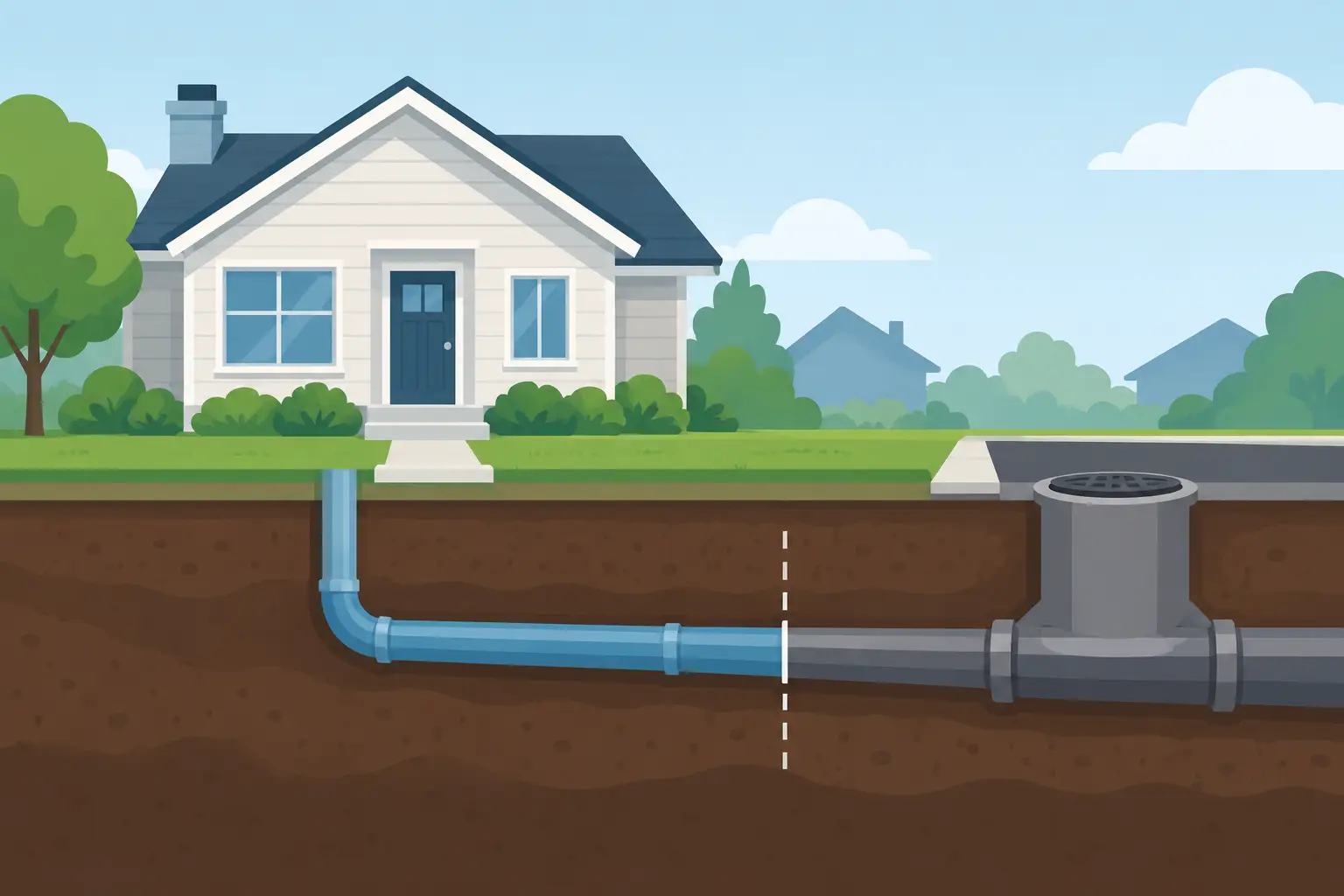
A sewer lateral is the underground pipe that carries wastewater from your home to the public sewer system. It typically receives water from toilets, sinks, showers, washing machines, and floor drains, then runs from the building toward the municipal sewer main beneath the street.
The public sewer main serves many properties and is generally maintained by the city, utility, or sewer authority. The lateral serving one home is often private, even when part of that pipe extends beyond your property line or under the sidewalk. That distinction catches many homeowners off guard.
Older homes may have clay, cast-iron, Orangeburg, or aging concrete sewer laterals. These materials can crack, shift, corrode, collapse, or develop root intrusion over time. Newer plastic pipe can also fail if it was poorly installed, crushed by soil movement, or damaged during excavation.
Guide to Sewer Lateral Responsibility: Who Owns What?
In many U.S. communities, the homeowner is responsible for the sewer lateral from the house all the way to the connection at the public main. In other areas, responsibility changes at the property line, curb, cleanout, or another defined point. Some municipalities maintain the section between the property line and the main, often called the upper lateral or lower lateral depending on local terminology.
There is no single national rule. Your city ordinance, utility policy, and service agreement control the answer. Never assume the city will repair a damaged pipe simply because the break is located in the front yard or beneath a public sidewalk.
Responsibility can become more complicated when a property has a shared lateral. This is more common in older neighborhoods, attached homes, duplexes, and properties that were built before modern sewer standards. If two homes connect to one private pipe, both owners may have obligations. A camera inspection and utility records can help establish the layout before anyone approves a repair.
When a sewer issue is suspected, contact the local utility to report the problem and ask whether it has inspected the public main. If the main is clear, request the utility’s written policy on private lateral ownership. Then arrange a professional camera inspection of your line. Clear information prevents finger-pointing, unnecessary digging, and surprise costs.
Signs the Problem May Be in Your Private Lateral
One slow sink does not automatically mean you have a broken sewer pipe. It may be a localized clog in a branch drain. But when several fixtures are affected at once, the issue may be farther down the system.
Watch for these warning signs:
- Multiple drains are slow, gurgling, or backing up at the same time.
- Water appears at a basement floor drain when toilets flush or laundry drains.
- Sewage backs up into a tub, shower, or lower-level toilet.
- Tree roots, recurring clogs, foul odors, or wet patches appear near the route of the sewer line.
A backup after a heavy storm can point to an overloaded public sewer, stormwater entering damaged pipes, or backflow through the home connection. A backup that happens whenever water is used indoors more often points to a blockage or damage in the private lateral. The cause matters because the right repair is different in each case.
Do not keep running fixtures to test the problem. Stop using water where possible, keep people and pets away from contaminated areas, and call for professional help. Sewage carries bacteria and can quickly damage drywall, flooring, insulation, and stored belongings.
Why a Camera Inspection Should Come First
A sewer camera inspection is the most practical way to see what is happening inside a lateral without guessing. A technician feeds a specialized camera through an accessible cleanout or drain and records the condition of the pipe. This can reveal root intrusion, grease buildup, offset joints, cracks, standing water, bellies, scale, or a collapsed section.
The camera also helps locate the problem above ground. That is critical if repair work could affect a driveway, landscaping, patio, finished basement, or sidewalk. A proper diagnosis should identify the type of pipe, the approximate depth, the location of the defect, and whether the line can be cleaned, repaired, or replaced.
Hydro jetting or drain snaking may restore flow when roots and buildup are the problem, but clearing a blockage is not the same as repairing a failing pipe. If roots return every few months, joints are separated, or the camera shows a collapse, repeated cleaning can become an expensive temporary fix.
Repair Options Depend on Pipe Condition
Once you know who is responsible and what failed, the repair approach should match the evidence. No surprises means receiving a clear explanation of the scope, access needs, permit requirements, restoration work, and expected life of the solution before work begins.
Traditional excavation is sometimes the right choice, especially for a fully collapsed line, major grade problem, or pipe section that cannot support trenchless work. It gives direct access to the pipe but may require removing concrete, landscaping, or other surface features.
Trenchless pipe relining can be a strong option when the existing pipe is structurally suitable. A resin-saturated liner is installed inside the damaged pipe and cured to create a new pipe within the old one. It can seal cracks, minor offsets, and root entry points while avoiding much of the excavation. However, relining may not be appropriate for a severely crushed pipe or a line with major slope issues.
Pipe bursting is another trenchless replacement method. It pulls a new pipe through the path of the old one while breaking apart the failed line. It can be useful for a more extensively damaged lateral, though access pits are still needed and site conditions determine whether it is feasible.
A qualified plumbing and drain team should explain the trade-off plainly: the least disruptive option is not always the best long-term option, and the lowest initial price is not always the least expensive repair over the life of the home.
Permits, Insurance, and Records That Protect You
Private sewer lateral work often requires permits and inspections. Requirements vary by location, particularly when work reaches the public right-of-way or connects to the municipal main. A licensed contractor should know when permits are needed and coordinate inspections required by the local authority.
Standard homeowners insurance often excludes or limits damage caused by sewer backup, service-line failure, or groundwater. Separate sewer backup coverage or service-line coverage may be available through an insurer, but policies differ. Review the deductible, exclusions, and claim requirements before an emergency happens.
Keep records of camera footage, estimates, permits, invoices, inspection approvals, and warranty documents. These records can support an insurance claim, help resolve questions with a utility, and give future buyers confidence that the work was completed professionally.
Prevention Is Cheaper Than a Basement Cleanup
A sewer lateral cannot be made maintenance-free, but many problems can be caught early. Avoid flushing wipes, paper towels, hygiene products, dental floss, grease, or food scraps. Products labeled flushable can still create blockages in real-world plumbing systems.
For older homes, periodic camera inspections are a sensible preventive step, particularly if large trees grow near the sewer route or the property has a history of backups. Consider a backwater valve where local conditions and plumbing configuration make it appropriate. This device can help prevent sewage from flowing backward into the building during a public sewer surcharge, though it must be installed correctly and maintained.
If a sewer problem is already affecting your home, do not wait for the next storm or the next load of laundry to make it worse. Fast diagnosis, clean work, and a repair built for the actual condition of the line can protect your basement, your property, and your peace of mind. Water Pro Master Corp can help property owners move from uncertainty to a clear repair plan with camera-based diagnostics and practical options.