

A sewer problem rarely stays small. One slow drain can turn into a sewage backup, a wet basement, damaged flooring, and a repair decision no property owner planned for. When weighing sewer patch versus replacement, the right answer depends on what a camera inspection finds inside the pipe – not just how serious the symptoms look from upstairs.
A targeted repair can be the smart, cost-conscious choice when damage is isolated. Replacement is often the safer investment when the pipe has failed in multiple places or has reached the end of its service life. The goal is not to sell more work than you need. It is to stop the problem at its source and avoid paying twice for the same sewer line.
What a Sewer Patch Actually Fixes
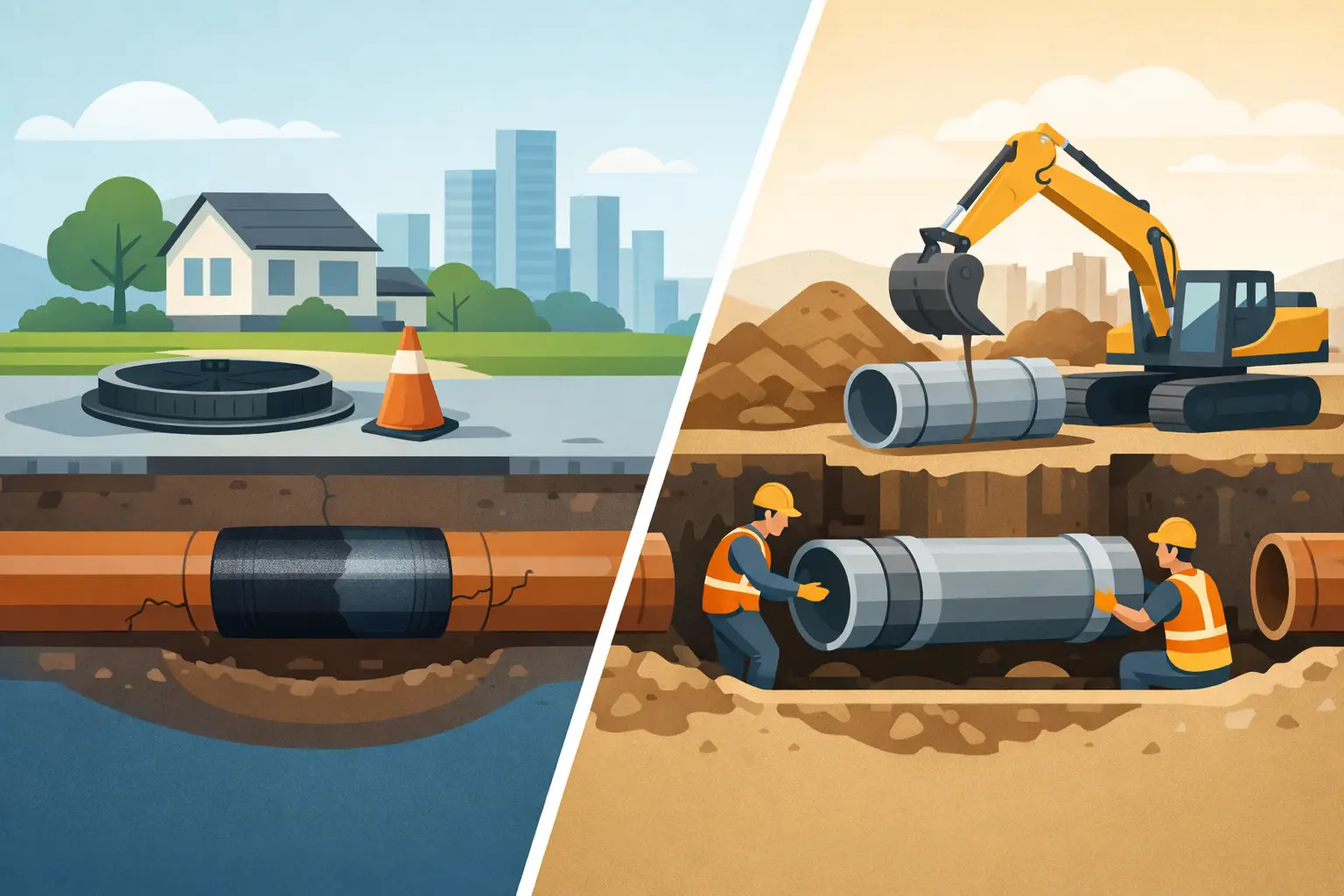
A sewer patch is a localized repair for a defined section of damaged pipe. Depending on the pipe material, location, and condition, a licensed plumber may repair the spot through a small excavation, an interior access point, or a trenchless method such as pipe relining.
This approach works best when a camera inspection identifies one clear defect: a small crack, a separated joint, a localized root intrusion point, or a limited crushed section. Instead of disturbing the entire sewer lateral, the damaged area is repaired while the sound sections remain in service.
For a property with a newer sewer line or a single accidental break, a patch can restore flow quickly and limit disruption. It may protect a driveway, landscaping, finished basement, or hard-to-replace concrete surface from unnecessary excavation. A properly selected trenchless spot repair can also reduce the mess around the property.
But a patch is only as reliable as the pipe around it. Repairing one opening in a line that is cracked, corroded, sagging, or root-filled from end to end does not make the rest of that line new. It can simply move the next failure down the pipe.
When a Targeted Sewer Repair Makes Sense
A patch is usually worth considering when the camera footage shows the rest of the line is structurally sound. The issue should be isolated, accessible, and unlikely to signal broader failure.
For example, roots may have entered at one failed joint while the remaining joints are tight and the pipe has a good slope. A localized repair can seal that weak point, restore the connection, and prevent roots from returning there. Likewise, a small section damaged during nearby construction may not justify replacing a long, otherwise healthy sewer lateral.
A patch can also be appropriate when the immediate priority is stopping an active leak or backup and there is a practical plan for future work. That said, temporary and permanent are not the same thing. Your plumber should explain clearly whether the proposed repair is designed as a long-term correction or a short-term measure to stabilize the situation.
The best starting point is a sewer camera inspection. It shows the location of the defect, the condition of the pipe walls, the presence of roots, standing water, offsets, cracks, scale buildup, and whether the line is holding its grade. Without that information, choosing a patch is a guess.
Sewer Patch Versus Replacement: The Core Difference
The decision comes down to scope and remaining pipe life. A patch addresses a specific failed area. Replacement removes and renews a larger portion of the sewer line, or the complete line from the building to the municipal connection where required.
Replacement is more involved, but it can eliminate multiple hidden weaknesses at once. In older homes, especially those with clay, Orangeburg, cast iron, or aging galvanized components, the pipe may have decades of wear behind it. Roots, shifting soil, corrosion, and repeated freeze-thaw cycles can create a line that fails in several places rather than one.
Modern replacement may not always mean digging up the whole yard. Trenchless pipe bursting can pull a new pipe through the path of the old one in suitable conditions. Pipe relining can create a new, jointless lining inside certain existing pipes. Conventional excavation remains necessary when a pipe has collapsed badly, has severe grade problems, or needs a layout correction.
Each method has trade-offs. Trenchless work can preserve more of the property surface, but it is not suitable for every pipe condition or route. Excavation can be more disruptive, yet it gives direct access to correct major breaks, bellies, and improper slope. A transparent estimate should explain the recommended method, why it fits the inspection findings, and what is included in restoration.
Signs Replacement May Be the Better Investment
Recurring backups are one of the strongest warning signs. If drains have been snaked repeatedly but the problem keeps returning, the issue may be structural rather than a simple blockage. Clearing roots and debris restores flow for the moment, but it cannot correct a collapsed line, widespread joint separation, or a sagging section that holds waste and water.
Replacement is often the practical choice when camera footage reveals several defects along the same line. Multiple root entry points, long sections of corrosion, widespread cracking, missing pipe material, or heavy deformation mean a spot repair may only buy limited time.
A sewer line with a belly also needs careful evaluation. A belly is a low section where water and solids collect because the pipe no longer has proper slope. Relining or patching may not solve a significant grade issue. In that case, excavation and pipe replacement may be needed to rebuild the line correctly.
Property plans matter, too. If you are finishing a basement, adding a rental suite, selling the home, or protecting a recently renovated yard, a full solution can be easier to justify than repeated emergency calls. A new sewer line or qualifying trenchless installation may also come with stronger long-term warranty protection than a series of isolated repairs.
Cost Is More Than the First Invoice
A sewer patch generally costs less upfront because it involves less pipe, labor, and restoration. That does not automatically make it the lower-cost decision over time. If a line needs hydro jetting every year, keeps allowing roots inside, or backs up again after two spot repairs, the total cost and disruption can surpass the price of replacement.
Replacement has a higher initial price because it addresses more of the system. Costs vary with pipe depth, length, material, access, soil conditions, local permits, restoration needs, and whether the work is trenchless or excavated. A driveway, garage floor, mature landscaping, or finished basement can affect the repair plan.
Be cautious with quotes that name a repair method before anyone has inspected the line. A dependable estimate should be based on diagnostic evidence. Ask to see the camera footage and have the contractor point out the exact defects. You should understand whether the price covers locating, permits, pipe work, cleanout access, testing, excavation, backfill, and surface restoration.
The cheapest estimate can become the most expensive if it skips the reason the line failed. No surprises means knowing what is being repaired, what remains original, and what risks may still exist afterward.
A Clear Way to Make the Decision
Start by separating a blockage from pipe failure. Grease, wipes, and debris can cause clogs in an otherwise sound line. Professional drain cleaning or hydro jetting may solve that problem without repair. Roots, offsets, cracks, collapse, and bellies are different. They point to damage that cleaning alone cannot fix.
Then consider the age and material of the pipe. A single crack in a relatively new PVC line is not the same as a break in an old clay or Orangeburg sewer lateral with repeated root intrusion. The remaining life of the pipe matters as much as the visible defect.
Finally, weigh the disruption of future failures. A patch may be sensible when it gives a stable long-term result. Replacement may be the better value when it prevents another sewage backup in a finished basement or avoids reopening a driveway a year from now.
For Toronto, Mississauga, and GTA property owners, Water Pro Master Corp uses camera diagnostics and repair options that match the condition of the line, including no-dig methods where they make sense. The recommendation should be straightforward: repair only what is damaged when the rest of the pipe is dependable, and replace the line when piecemeal fixes would leave your property exposed.
Sewage and wastewater do not wait for a convenient time to come back. If you have slow drains, repeated clogs, foul odors, or any sign of a backup, get the sewer line inspected before a manageable repair becomes a basement emergency.