A shower that fades to a trickle halfway through, a washing machine that takes forever to fill, or a kitchen faucet that suddenly loses force can make a normal day frustrating fast. What causes low water pressure is not always obvious, and the wrong guess can lead to unnecessary repairs while the real issue gets worse behind a wall, under a floor, or outside at the water line.
The first clue is where and when the pressure drops. Is it one faucet, every fixture, only the hot water, or only during certain hours? Those details help separate a simple fixture problem from a plumbing issue that needs prompt professional attention.
What Causes Low Water Pressure Throughout a House?
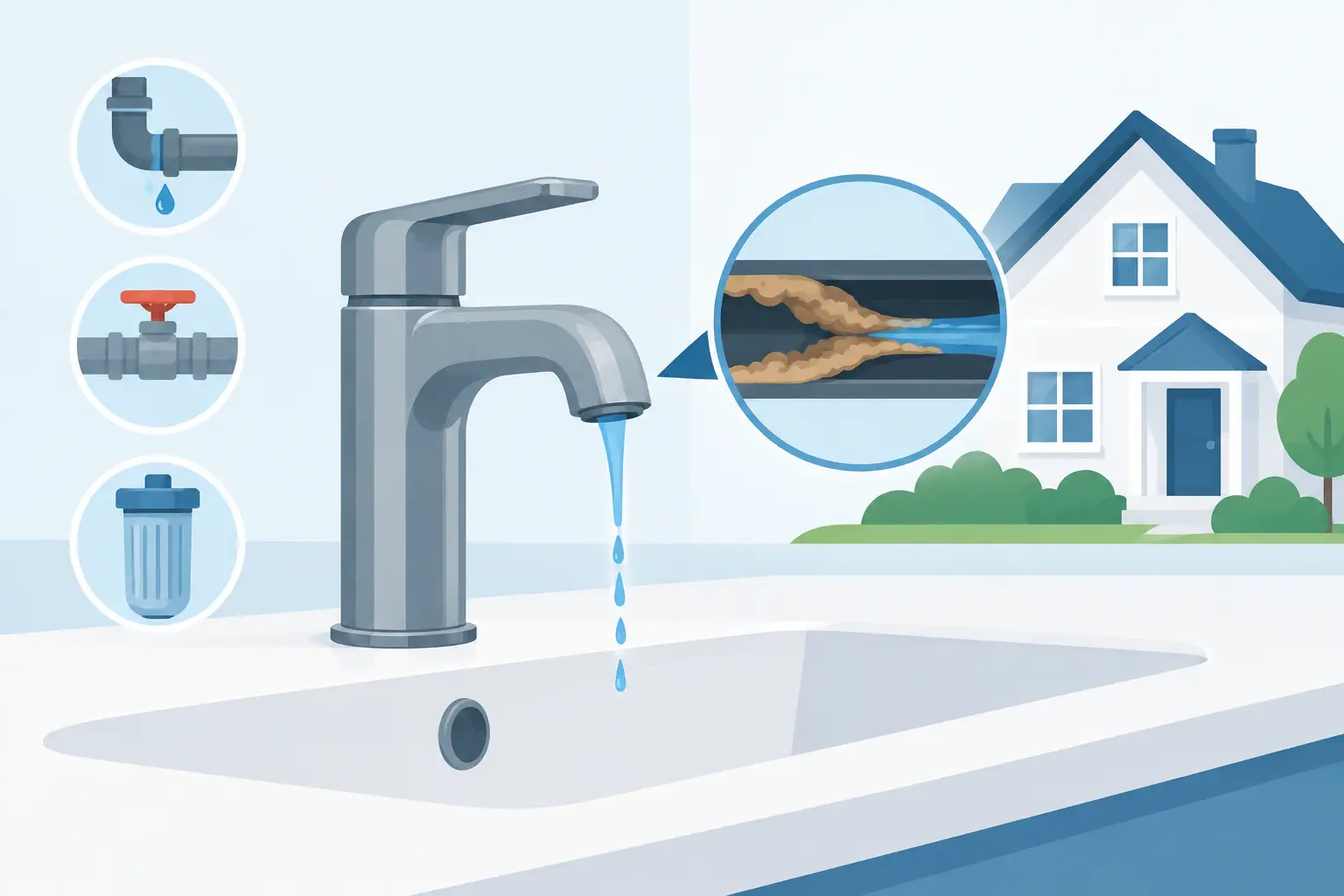
When low pressure affects nearly every faucet, shower, and appliance, the cause is usually somewhere before the individual branch lines. It may be a partially closed main shutoff valve, a failing pressure regulator, an underground water-line leak, or a problem with the municipal supply.
Older homes in Toronto, Mississauga, and across the GTA can have original or aging supply pipes that have narrowed internally over decades. Galvanized steel pipes are especially prone to corrosion buildup. The pipe may look intact from the outside, but mineral scale and rust can reduce the opening inside until water flow becomes noticeably weak.
A sudden whole-house pressure drop deserves faster attention than a gradual one. If it comes with a higher water bill, damp spots, a hissing sound near plumbing, unexplained foundation moisture, or water pooling outside, a hidden leak may be wasting water before it reaches your fixtures. An underground water-line leak can also damage landscaping, saturate soil near the foundation, and create conditions that contribute to basement water problems.
A partially closed shutoff valve
The main water shutoff valve is often located near the water meter or where the service line enters the home. If it was turned during a repair and never fully reopened, every fixture can suffer. Gate valves are common in older properties, but they can be misleading: the handle may turn while the internal gate remains stuck or only partly open.
Do not force an old valve that feels seized. A broken valve can turn a pressure issue into an active leak. A plumber can confirm whether the valve is working properly and replace it when needed.
A failing pressure regulator
Some homes have a pressure-reducing valve, also called a pressure regulator, installed on the incoming water line. Its job is to keep incoming pressure at a safe, consistent level. When it fails, pressure may become weak, fluctuate from day to day, or surge unexpectedly.
Low pressure is inconvenient, but overly high pressure is also a concern. It puts added strain on pipes, appliance hoses, fixtures, and water heaters. Testing pressure with the right gauge helps identify whether the issue is low supply pressure, a failing regulator, or restricted piping.
A municipal or neighborhood supply issue
If several nearby homes have the same problem, the cause may be outside your property. Water-main work, hydrant use, a break in a municipal line, or high neighborhood demand can temporarily affect supply pressure.
Ask a neighbor before assuming the problem is inside your home. If theirs is normal, the investigation should focus on your service line, valve, meter setup, or plumbing system. If the entire block is affected, contact the local water provider while keeping an eye out for leaks or discolored water.
Low Pressure at One Faucet or Shower
A single weak fixture is often the best-case scenario. The restriction may be right at the faucet aerator, showerhead, cartridge, or supply stop valve beneath the sink.
Mineral deposits, sediment, and debris from recent plumbing work can clog the fine screen in an aerator. Unscrew it carefully, rinse away visible buildup, and test the faucet again. A showerhead can collect similar deposits, especially where hard water is present. If cleaning restores the flow, the plumbing behind the wall is likely fine.
If the faucet remains weak after cleaning the aerator, the fixture cartridge or the small shutoff valves under the sink may be the issue. A worn cartridge can restrict both flow and temperature control. A stop valve that is not fully open, corroded, or internally damaged can limit water to one fixture even when the rest of the house has normal pressure.
It depends on the age and condition of the fixture whether repair makes sense. Replacing a cartridge is often cost-effective, while a corroded valve or failing older faucet may be better replaced than repeatedly repaired.
Low Hot Water Pressure but Normal Cold Water Pressure
When cold water runs normally but hot water is weak at multiple fixtures, look toward the water heater and its connections. Sediment can build up in a tank-style heater, and aging valves or corroded hot-water pipes can restrict flow after water leaves the unit.
A partially closed valve above the water heater is a possible simple cause. More serious possibilities include sediment in the heater, a deteriorating dip tube, or corrosion in older hot-water lines. Because water heaters combine pressurized water, heat, and sometimes gas or electrical components, this is not a repair to guess through.
If you see moisture around the heater, rust at fittings, popping or rumbling sounds, discolored hot water, or inconsistent temperatures, arrange service promptly. A slow leak near a water heater can damage finished basement flooring and conceal a larger plumbing failure.
Clogged or Damaged Pipes Can Restrict Flow
Not every restriction is visible. Scale, rust, grease, and debris can gradually narrow pipes, while a damaged water line can reduce pressure more suddenly. Tree roots usually invade drain and sewer lines rather than pressurized water lines, but shifting soil, freezing conditions, poor past repairs, and corrosion can all affect a buried supply pipe.
This is where diagnosis matters. Replacing a faucet will not solve a cracked water line. Likewise, excavating a yard is unnecessary if the issue is a simple failed regulator. A professional inspection can isolate the pressure loss, assess the condition of the line, and recommend the least disruptive repair that will last.
For buried pipe issues, no-dig repair options may be available depending on the line’s location and damage. In other cases, targeted excavation or water-line replacement is the safer long-term choice. The right option depends on pipe material, accessibility, code requirements, and how much of the line has deteriorated.
Check for Leaks Before the Damage Spreads
A leak does not need to flood a room to affect water pressure. Small leaks can run unnoticed inside walls, beneath slabs, behind finished basement ceilings, or underground. Over time, that water can raise utility costs, weaken building materials, encourage mold growth, and add moisture around the foundation.
A practical first check is to turn off all faucets, appliances, and fixtures that use water, then watch the water meter. If the meter continues moving, water may be escaping somewhere in the system. This test does not identify the leak location, but it tells you the issue should not be ignored.
Call for immediate help if you notice any of the following:
- Water stains spreading across a ceiling, wall, or basement floor
- A sharp increase in your water bill without a clear reason
- Warm spots on a floor, especially near a hot-water line
- Water collecting near the foundation or a persistently soggy area outdoors
- Low pressure that begins suddenly along with visible moisture or unusual sounds
Shut off the main water valve if water is actively flowing where it should not be. Then avoid using appliances, showers, or faucets until the source is assessed.
When Low Pressure Is a Plumbing Emergency
Low water pressure by itself is not always an emergency. A clogged aerator can wait until a convenient repair appointment. But pressure loss combined with a burst pipe, sewage backup, flooded basement, or suspected underground leak needs a same-day response.
Do not confuse low water pressure with a drain problem, either. Slow drains, gurgling toilets, and water backing up into a tub point to a drainage or sewer restriction, not a lack of supply pressure. Both problems involve water, but they require different diagnostic tools and repairs. A camera inspection, drain cleaning, hydro jetting, or sewer repair may be appropriate for drainage symptoms, while pressure testing and water-line diagnostics are used for supply issues.
Water Pro Master Corp helps GTA property owners identify the actual cause before recommending repair. That means clear findings, practical options, and clean work that protects your home instead of adding another surprise to an already stressful problem.
If your water pressure has changed suddenly, treat it as useful information from your home. Check which fixtures are affected, look for signs of leakage, and get the system assessed before a minor restriction becomes water damage, an expensive excavation, or a basement repair you could have avoided.